Deep dive
Every sneaker sale pays a toll. Here's what StockX and GOAT collect.
We ran both sites' published fees over 14.2 million resale sales. The answer for 2025 is about $278 million, most of it from a few hit shoes, and a business that struggles to make a $40 order pay.

Every pair sold on StockX or GOAT takes the same trip. The seller ships it in, a person checks that it is real, and it is boxed up again and sent on to the buyer. For that trip, the marketplace keeps a cut of the price.
Neither company says what those cuts add up to. Both are private, and neither publishes its revenue, let alone its profit. But the fees are public, and we record the sales. So we did the math.
The short version
- Every time a pair sells, StockX and GOAT keep a cut of the price, usually about 10% to 15%.
- On the 14.2 million sales we tracked in 2025, those cuts add up to about $278 million.
- A handful of hit shoes, like the Jordan 4 Retro Black Cat (2025), earn most of it. Cheap pairs barely pay their way.
- After the likely costs of payments, people, packaging and running the company, our middle estimate leaves StockX about $18.3 million and GOAT about $1.9 million. Thin, and you can test it yourself below.
A note on what this is. We applied each site's published seller fees to every sale in our data. That makes these figures a floor, not the companies' revenue: they leave out buyer fees (StockX does not publish its own), sales of products we do not track, other countries' fee rules, and every cost of running the business.
The toll
The toll is mostly a percentage. On a $150 pair, a new StockX seller hands over $18.00: a 9% transaction fee and 3% for processing. On GOAT, the same sale costs $19.25: a 9.5% commission plus $5 for the prepaid shipping label, and 2.9% more if the seller moves the money to a bank. Drag the price to see where the money goes.
New StockX seller (level 1); GOAT seller with a prepaid label, before the optional 2.9% cash-out. Shipping and buyer fees not included.
See the full fee rules
| Seller fee (US, checked 2026-10-08) | StockX | GOAT |
|---|---|---|
| Percentage of the sale price | 7% to 9% by seller level, plus 3% processing | 9.5% commission (up to 25% for sellers with cancellations) |
| Flat fee | $5 minimum transaction fee | $5 seller fee with a prepaid label, $0 with drop-off |
| Getting paid | Included | 2.9% to cash out to a bank or PayPal |
| Buyer side | Processing fee set per order, not published | Shipping and tax; no published buyer fee |
Sources: StockX seller fees, StockX buyer fees, GOAT fee policy.
About $278 million, and that is only part of it
Add up those tolls across every sale we recorded in 2025, 9.3 million on StockX and 4.9 million on GOAT, and you get roughly $175 million for StockX and $103 million for GOAT.
Those are middle-of-the-road numbers (StockX's middle seller level, and GOAT sellers using its prepaid label). Sellers who sell a lot pay StockX less, and GOAT sellers can skip the label fee or the cash-out, so the true figure for the same sales could be anywhere from $160 million to $190 million for StockX and $78.8 million to $124 million for GOAT.
| 2025, sales we recorded | StockX | GOAT |
|---|---|---|
| Sales | 9,284,511 | 4,865,489 |
| Value of those sales | $1.58 billion | $829 million |
| Average sale | $169.90 | $170.39 |
| Seller fees, low to high | $160 million to $190 million | $78.8 million to $124 million |
| Share of sale value kept | 10.14% to 12.07% | 9.5% to 14.97% |
| Seller fee per order (average, central case) | $18.86 | $21.19 |
What about the fees buyers pay? They are not in these numbers. StockX charges buyers a processing fee that it sets order by order and does not publish, and both sites charge buyers for shipping, more for faster options like StockX's Xpress Ship. Shipping money mostly goes to pay the carriers, so it is not all profit. What we can say is how much a buyer fee would add: every 1% charged to buyers on the sales we recorded would be about $15.8 million more for StockX and $8.3 million more for GOAT a year.
Seen this way, the two companies look like twins. The average sale is about $170 on both, and each keeps about $21 per order. StockX simply moves nearly twice as many pairs in our data.
December is the big month, when holiday shoppers push both sites to their peak. This year is harder to read. Our recorded totals for summer 2026 are well below last year's, but our own feed has a gap and has thinned lately, and we cannot separate that from real change in the market, so we do not read it as the companies shrinking. What is real is that prices have slipped: according to our Resale Index, the same shoes sold for 7.0% less in September than a year earlier, after rising in the first half of the year, and a percentage fee shrinks right along with the price. In the last 90 days the average StockX sale was $156.02 ($169.90 in 2025) and the fee per order $17.35 ($18.86).
The $40 problem
Here is the catch. A $40 pair takes the same trip as a $400 pair: shipped in, checked by hand, packed and shipped out. But because the toll is mostly a percentage, the cheap pair pays a fraction of it.
In 2025, pairs under $100 made up 31% of StockX's orders but brought in just 13% of its seller fees (on GOAT, 27% and 15%). Pairs between $150 and $500 brought in 54%.
StockX
GOAT
Light bars: share of 2025 orders in each price band. Dark bars: share of seller fees (middle case).
That is why both sites charge a flat minimum. StockX's $5 floor kicks in on any sale under about $56, which covered 10% of its 2025 sales, and it pushes StockX's cut on pairs under $50 to 16%, compared with 11% on pairs over $1,000.
GOAT leans on its flat fee much harder. Its $5 label fee alone would make up about 24% of its seller-fee income, and it lifts GOAT's cut on pairs under $50 to 23%. (Sellers who drop their pairs off skip that fee, so our low estimate leaves it out.)
| Price band (2025) | StockX | GOAT | ||||
|---|---|---|---|---|---|---|
| Orders | Median fee | Take | Orders | Median fee | Take | |
| Under $50 | 8% | $6.20 | 16.0% | 3% | $8.80 | 23.0% |
| $50-99 | 23% | $8.69 | 11.1% | 24% | $12.60 | 15.9% |
| $100-149 | 27% | $13.53 | 11.0% | 27% | $16.59 | 13.6% |
| $150-249 | 27% | $20.68 | 11.0% | 29% | $22.96 | 12.1% |
| $250-499 | 13% | $33.88 | 11.0% | 15% | $33.69 | 11.1% |
| $500-999 | 2% | $66.77 | 11.0% | 1% | $62.00 | 10.3% |
| $1,000+ | under 1% | $151.25 | 11.0% | under 1% | $135.62 | 9.8% |
What it costs to run, and what might be left
Here is the part neither company will show you: the bill. We cannot see their books, so we built a model from published prices you can check, and we let you change every number in it. Treat what comes out as an educated estimate, not a fact.
Every order costs money in roughly four ways. The card payment has to be processed, which most payment companies price at about 2.9% plus 30 cents. Someone has to receive the box, check the pair and pack it again; the median wage for that kind of inspection work in the US is $22.04 an hour. There is packaging. And then there is everything else: the app, the ads, the offices, the lawyers, the people who answer email.
For that last part we borrowed a real company's numbers. TheRealReal, a public resale marketplace that also authenticates every item, spent 38% of its 2025 revenue on marketing and general costs, and 40% on operations and technology, and still lost money: about $6.67 on each of its 3.6 million orders. Its items are one-of-a-kind luxury goods that sell for $594 on average and must be photographed and priced by hand, so it is a costlier business than selling identical sneakers. It sets a ceiling, not a target.
Model, not reported figures. Revenue = seller fees on the sales we recorded in 2025 (middle case) plus your buyer fee. Card processing 2.9% + $0.30 on what the buyer pays (Stripe's standard price; big platforms likely pay less). Handling at $22.04/hour (BLS median, May 2024), before benefits. Return = modelled yearly profit divided by money the company has reported raising.
In our middle scenario, the sales we recorded would leave StockX an operating profit of about $18.3 million a year, a margin of 8%, and GOAT about $1.9 million, 2%. Measured against the money each has reported raising, that is a yearly return of roughly 2.6% for StockX and 0.4% for GOAT, and about 0.48% and 0.05% of what investors valued them at in 2021. Nudge the handling time or the overhead and those numbers swing a lot, which is the honest point: a sneaker marketplace runs on thin, fragile margins, and buyer fees are what make or break it.
Where the model's numbers come from
- Seller fees: each site's published US schedule applied to every sale we recorded in 2025 (middle case: StockX level 3, GOAT prepaid label, no cash-out).
- Buyer fee: StockX does not publish one; it introduced a 3% buyer processing fee in 2021, per press reports, and now sets fees per order. GOAT lists no buyer fee beyond shipping. The middle scenario uses 3% and 0%.
- Card processing: Stripe standard pricing, 2.9% + $0.30 per US card payment.
- Handling wage: BLS OEWS, inspectors, testers, sorters, samplers and weighers, median $22.04/hour, May 2024. Minutes per pair and packaging are our assumptions.
- Overhead benchmark: TheRealReal 2025 annual report (10-K): revenue $692.8 million, marketing $63.3 million, operations and technology $275.9 million, selling, general and administrative $201.6 million, loss from operations $23.9 million, 3.6 million orders.
- Money raised and valuations: StockX about $692 million raised and valued at $3.8 billion in April 2021; GOAT about $487 million raised and valued at $3.7 billion in June 2021 (company funding announcements as reported by Wilson Sonsini and Retail Dive; totals raised from Tracxn company profiles).
A few shoes pay the bills
Like a record label or a movie studio, these marketplaces live on hits. Rank every product by the fees it earned in 2025, and the top 1% of products brought in 59.6% of StockX's fees and 68.5% of GOAT's. The top 10% brought in 87.6% and 90.5%. Behind them sits a long tail: 159,867 different products sold at least once on StockX.
One product in a hundred earned 59.6% of StockX's seller fees.
StockX's top earners, 2025
 Jordan 4 Retro Black Cat (2025)$1.3Min seller fees · 38,899 sales · median $307
 Jordan 11 Retro Gamma Blue (2025)$1.3Min seller fees · 33,645 sales · median $344
 Jordan 4 Retro White Cement (2025)$1.3Min seller fees · 44,603 sales · median $248
 Pop Mart Labubu The Monsters Exciting Macaron Vinyl Face Blind Box Whole Set$1.3Min seller fees · 70,482 sales · median $137
 Pop Mart Labubu The Monsters Big into Energy Series Vinyl Plush Pendant Sealed Case (6 Blind Boxes)$1.3Min seller fees · 53,585 sales · median $195
GOAT's top earners, 2025
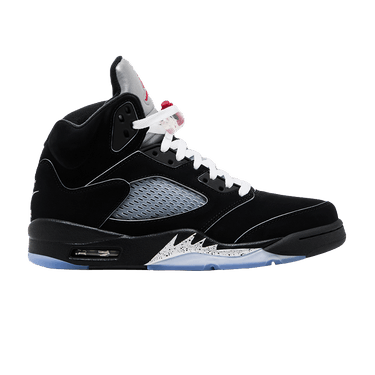 Air Jordan 5 Retro OG 'Black Metallic Reimagined'$1.9Min seller fees · 53,115 sales · median $314
 Air Jordan 11 Retro 'Gamma Blue' 2025$1.6Min seller fees · 46,771 sales · median $317
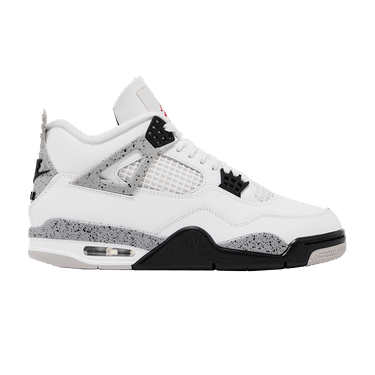 Air Jordan 4 Retro OG 'White Cement' 2025$1.5Min seller fees · 53,369 sales · median $254
 Air Jordan 4 Retro 'Black Cat' 2025$1.5Min seller fees · 47,437 sales · median $261
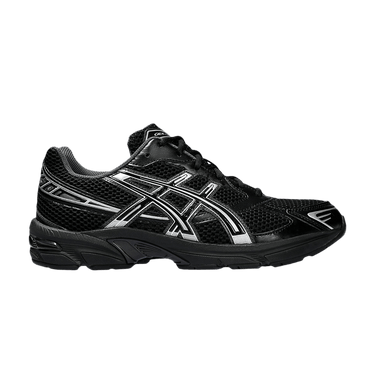 Asics Gel 1130 'Black Pure Silver'$1.2Min seller fees · 70,709 sales · median $125
Going by the brand names each site uses, Jordan alone accounted for 28% of StockX's fee income in our data and 42% of GOAT's. And StockX is less of a sneaker company than you might think. Pop Mart, the maker of Labubu dolls, earned it 4.3% of its fees, more than New Balance or ASICS, and two Labubu releases sit in StockX's top five.
So, are they making money?
Sales data alone cannot say. But it does sketch the shape of the business: about $20 in seller fees per order, most of it from pairs over $150, about 25% of StockX orders bringing in less than $10 (just 4% on GOAT, thanks to its flat fee), and a handful of hits carrying the year.
A big Jordan retro helps a lot. A market where the same shoes keep getting cheaper, as they have since July, squeezes every order. The one lever we cannot see is the buyer fee, which StockX sets order by order and does not publish.
What this means for you
If you buy
The site earns more when prices are higher, and the same shoe can sell for different prices on each site (see our Maison Mihara story). StockX sets buyer fees per order, so the price that matters is the one at checkout.
If you sell
On a $150 pair you keep about $132.00 on StockX as a new seller, or $130.75 on GOAT with a prepaid label, before shipping and cash-out. Cheap pairs lose a bigger share: under $50 the take is about 16% on StockX and 23% on GOAT. Our where to sell tool does the math for any price.
If you like business
These are volume businesses that live on hits: about $20 of seller fees per order, a few releases carrying the year, and a fee that shrinks whenever resale prices fall. Watch the big Jordan retros and the Resale Index.
Questions
How much money does StockX make?
StockX is private and does not publish revenue. On the 9,284,511 StockX sales we recorded in 2025 ($1.58 billion), its published seller fees add up to $160 million to $190 million, depending on seller level. Buyer fees come on top and are not published, and our feed covers only the products we track, so the company's real revenue is higher.
How much money does GOAT make?
GOAT is private too. On the 4,865,489 GOAT sales we recorded in 2025 ($829 million), its published 9.5% commission, seller fee and cash-out fee add up to $78.8 million to $124 million. That is seller-side fees on the sales we see, not the whole company.
Do these numbers include buyer fees and express shipping?
No. They count only the fees sellers pay. StockX's buyer processing fee is set per order and not published, and buyer shipping charges, including faster options such as Xpress Ship, and sales tax are left out; shipping charges mostly pay the carriers. Every 1% charged to buyers on the sales we recorded in 2025 would add about $15.8 million for StockX and $8.3 million for GOAT.
Are StockX and GOAT profitable?
Neither company publishes profit or costs, so sales data cannot answer it. What it can show is how much fee each order brings in: a median $14.63 per StockX order and $18.30 per GOAT order in 2025. Authenticating, shipping and supporting an order costs money on every sale, so cheap orders are the hardest to make pay.
What percentage do StockX and GOAT take?
From sellers, StockX takes a 7% to 9% transaction fee (minimum $5) plus 3% processing. GOAT takes 9.5% plus a $5 seller fee with a prepaid label ($0 with drop-off), and 2.9% if the seller cashes out to a bank or PayPal. Across 2025's sales that worked out to 10.14% to 12.07% of sale value on StockX and 9.5% to 14.97% on GOAT.
Method. Every resale sale recorded by SneakerPulse on StockX and GOAT from January 1 to December 31, 2025 (both feeds complete that year; StockX
from October 2024, GOAT from December 28, 2024), all categories we track, USD, and the last 90 whole days (July 9 to October 6, 2026) for comparison. Fees use each site's published US
seller schedule, checked 2026-10-08: StockX transaction fee 9% (level 1, new sellers, high case), 8% (level 3, middle case) or 7% (level 5, low case), minimum
$5, plus 3% processing; GOAT 9.5% commission, plus the $5 prepaid seller fee (middle and high case, $0 drop-off in the
low case), plus the 2.9% cash-out fee on the seller's payout (high case only). Every sale is treated as a US seller in good standing; real fees are higher for
sellers with cancellations and differ in other countries. Buyer fees, promotions, returns, shipping charges and taxes are not included. Our feed covers the products we track, not every
sale on either site, and coverage changes over time, so totals are for the sales we recorded, not company revenue. The Resale Index comparison is same-shoe (see /resale-index).
Query: tools/marketplace_economics.py. Data: JSON. Not financial advice.